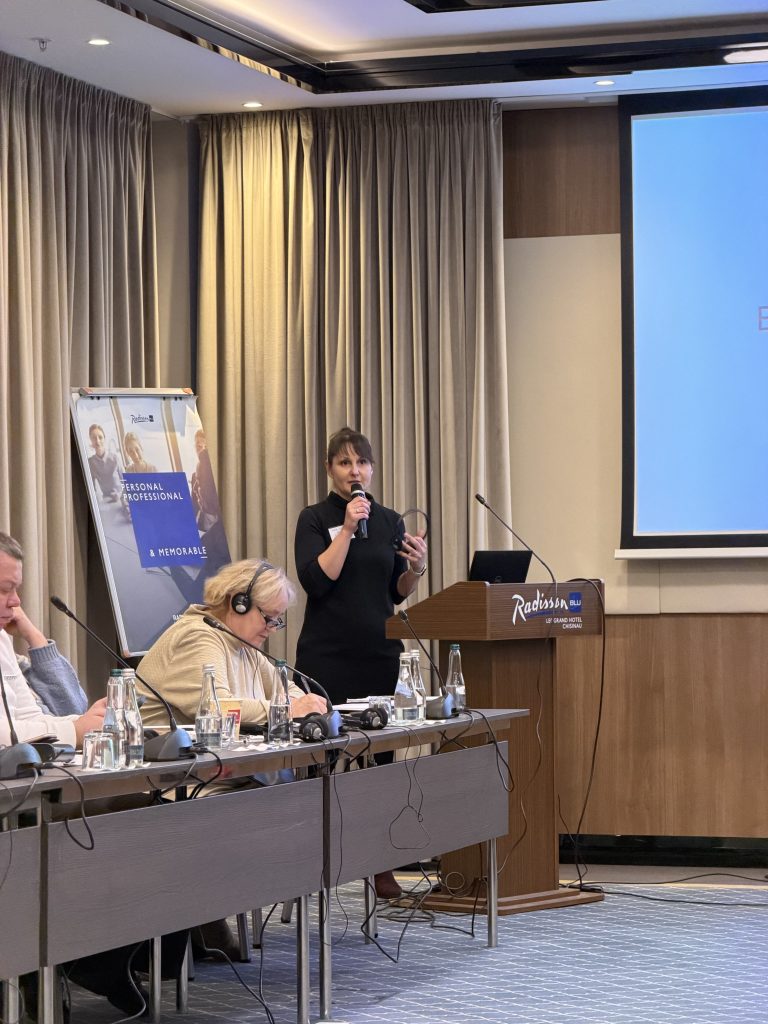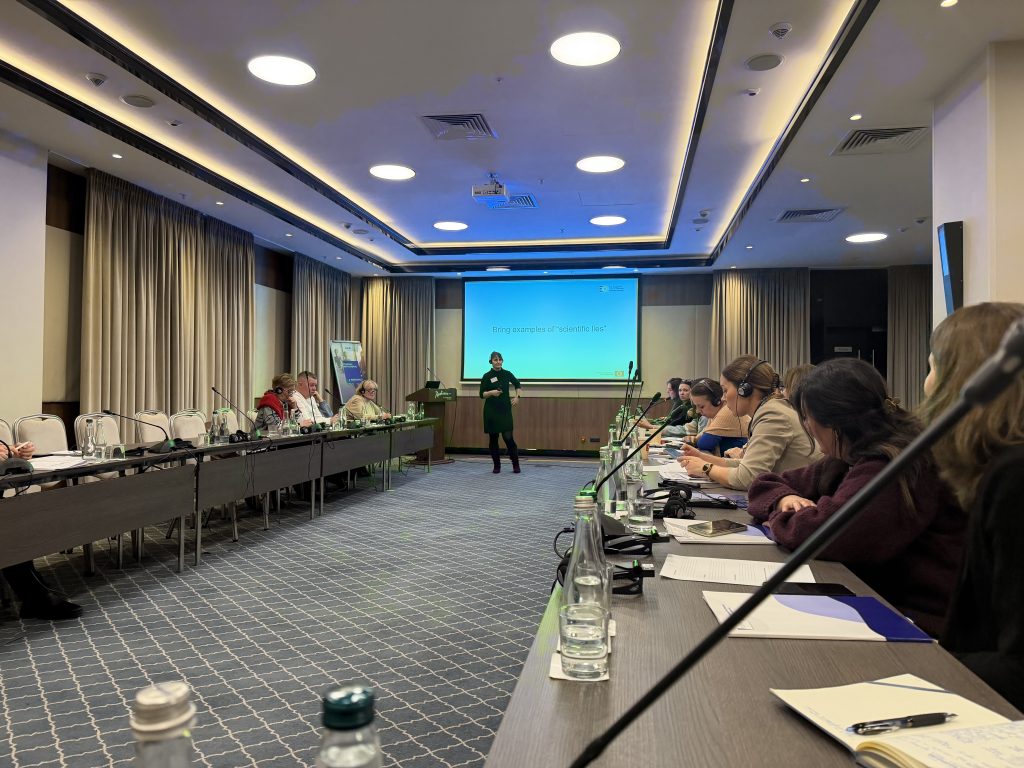
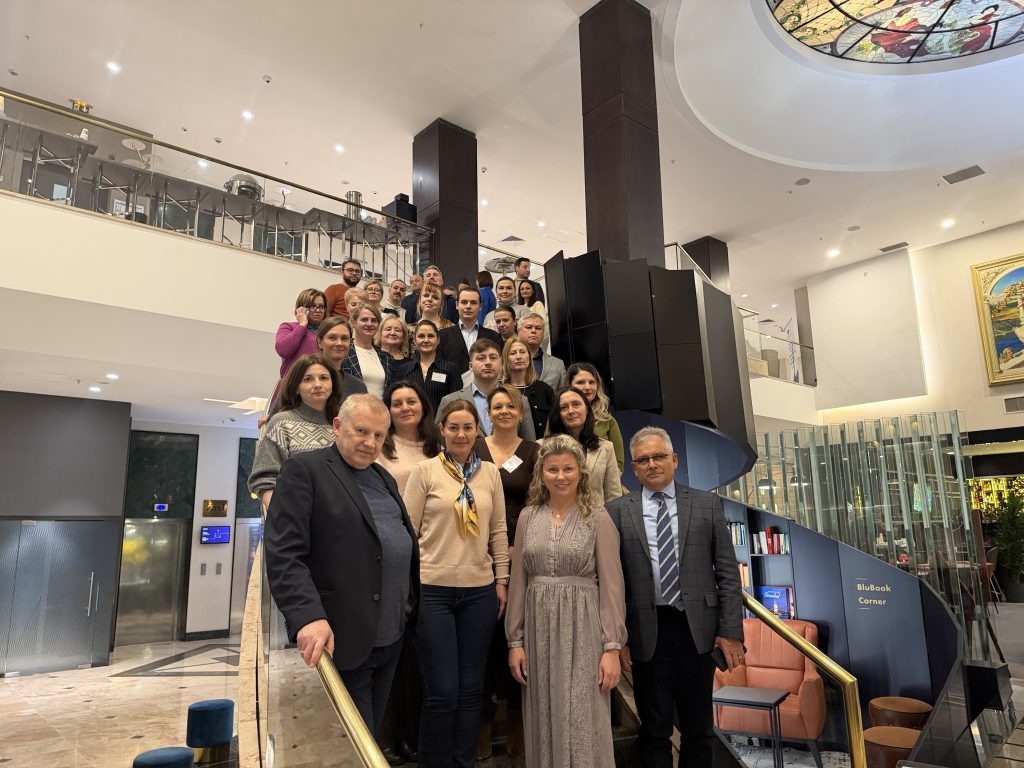
From 20–22 January, BECID experts visited Moldova to deliver training for faculty members at the State University of Moldova in Chișinău. The trainings focused on disinformation, foreign information manipulation and interference (FIMI), and media and information literacy (MIL), with a strong emphasis on how these topics can be taught and embedded in academic curricula.
The BECID delegation included lead researcher Marju Himma, project manager Gretel Juhansoo, media literacy expert Maria Murumaa-Mengel, and associate professor Ragne Kõuts-Klemm from the Institute of Social Studies, University of Tartu.
Over the course of the three-day visit, the experts delivered lectures, seminars, and workshops, sharing academic knowledge and methodological approaches related to strategic communication, information space analysis, global politics, and societal resilience.
The aim of the visit was to take another step, in cooperation with the State University of Moldova, Moldova’s Centre of Strategic Communication and Countering Disinformation, and PractNet experts, toward establishing a dedicated study programme at the University. The initiative seeks to strengthen academic cooperation and support the development of a new generation of Moldovan experts in the field of countering disinformation and information manipulation.
A key focus of the programme was capacity-building in value-based strategic communication and information space analysis, enabling both academic and governmental institutions to better understand, analyse, and respond to disinformation and other forms of information manipulation. The trainings were designed collaboratively, taking into account the local context in Moldova and students’ existing knowledge, and included work on course planning, didactics, and learning outcomes.
The three-day programme covered both academic and practical perspectives on countering disinformation. On 20 January, Professor Ragne Kõuts-Klemm introduced the Master’s programme “Disinformation and Societal Resilience” and discussed the development of an interdisciplinary study programme. On 21 January, she focused on sociological and data analysis approaches to disinformation, while Professor Marju Himma examined the impact of disinformation on local-level politics and science communication. On 22 January, Gretel Juhansoo and Professor Maria Murumaa-Mengel addressed youth media literacy, digital cultures, and the role of AI in spreading dis- and misinformation, sharing teaching approaches from the University of Tartu and BECID.
Overall, the visit marked an important step in strengthening Moldova’s academic capacity in the field of disinformation studies and laid the groundwork for continued collaboration on establishing a specialised study programme at the State University of Moldova.