


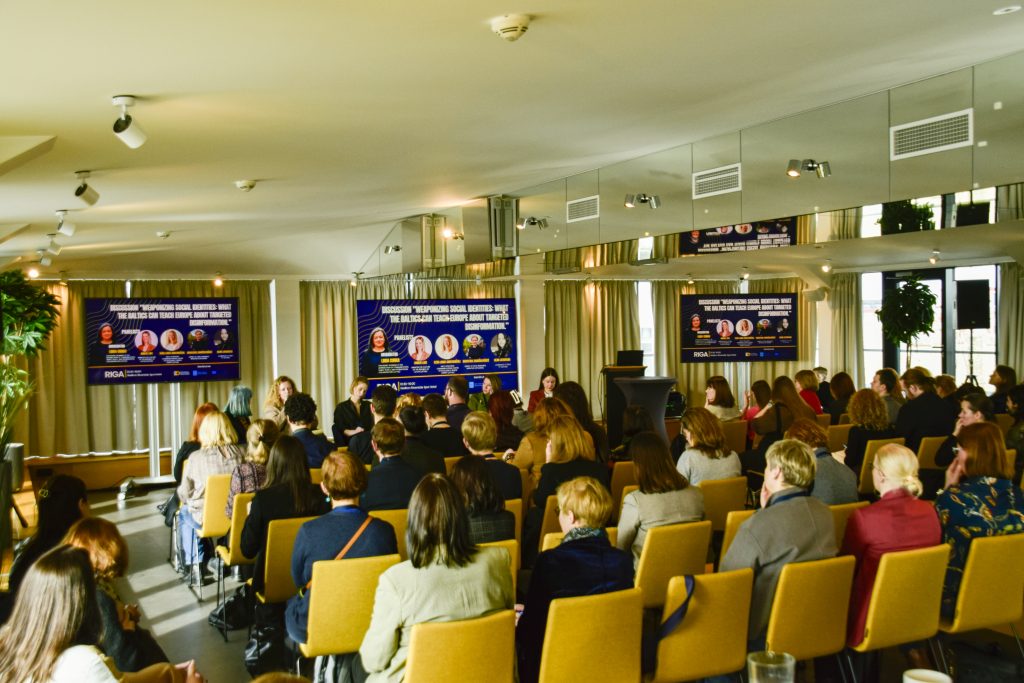
Gendered and identity-based disinformation has become an increasingly visible challenge in democratic societies, particularly in the Baltic information environment. The conference “Resilient Voices: Women & Disinformation” brought together policymakers, journalists, researchers, and civil society representatives to explore how disinformation targeting gender and identity operates, how it affects democratic participation, and what responses are needed to address it.
Through keynote speeches, panel discussions, and expert presentations, participants examined how digital platforms, geopolitical narratives, and social stereotypes intersect to shape the spread of gendered disinformation. Discussions emphasized the importance of strengthening media ecosystems, protecting journalists, supporting civil society, and promoting media literacy to safeguard democratic processes.
Gendered Disinformation as a Threat to Democracy
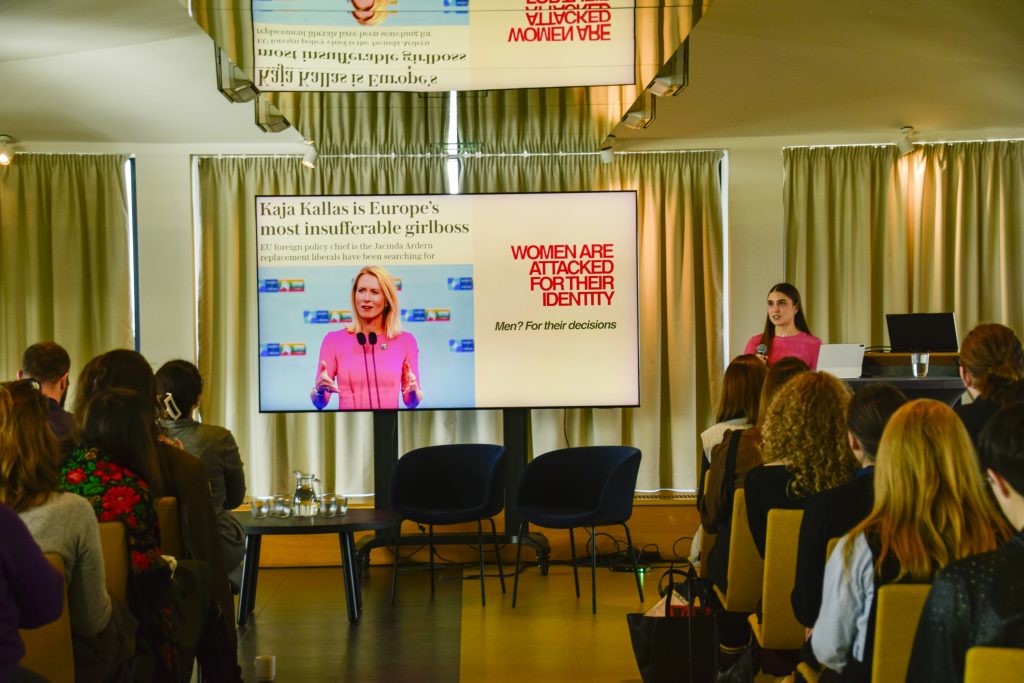
The conference opened with a keynote by Hanah Lahe, the youngest Member of Parliament in Estonia, who highlighted the growing impact of gendered disinformation on democratic governance and political participation.
Lahe explained that gendered disinformation rarely aims to change political opinions directly. Instead, it often seeks to silence and marginalize voices – particularly women in politics and public life. Women are frequently targeted through attacks on their identity, appearance, or personal lives, while criticism directed at men more often focuses on political decisions or actions. This dynamic illustrates how gendered disinformation functions as a political strategy designed to undermine women’s credibility in public spaces.
Technological developments have significantly amplified this problem. Artificial intelligence and deepfake technologies allow harmful content to be produced and disseminated at unprecedented speed and scale. Research cited during the keynote highlighted that the overwhelming majority of deepfake videos online are pornographic and that women constitute the vast majority of victims.
Lahe emphasized that gendered disinformation should therefore not be treated solely as a gender equality issue but as a broader governance challenge that threatens democratic participation, public trust, and inclusive political systems.

Identity Narratives and the Baltic Information Environment
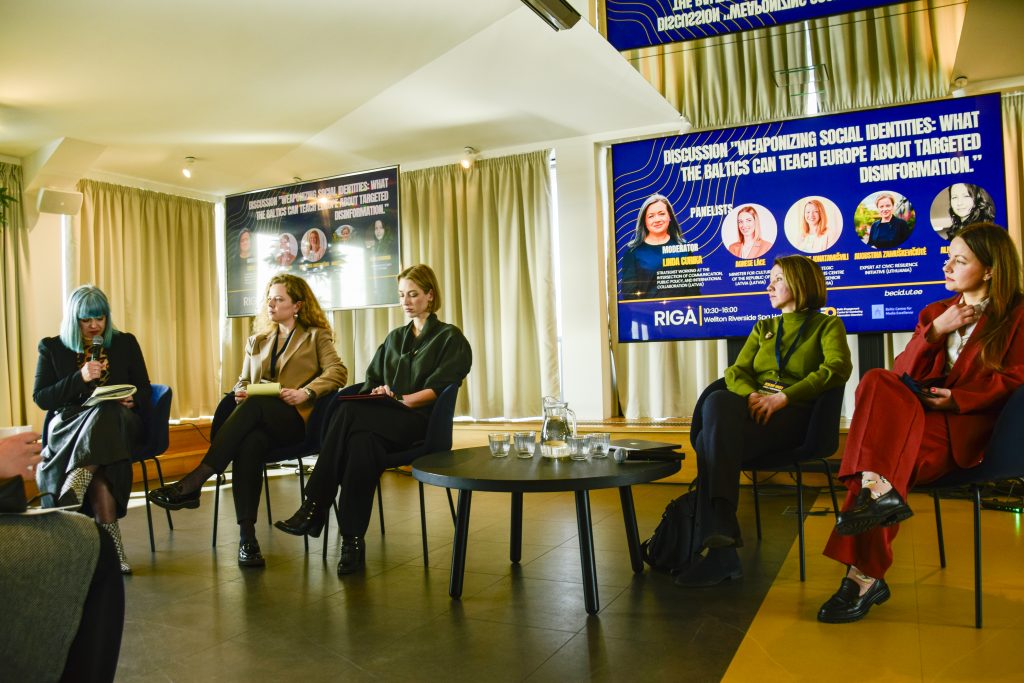
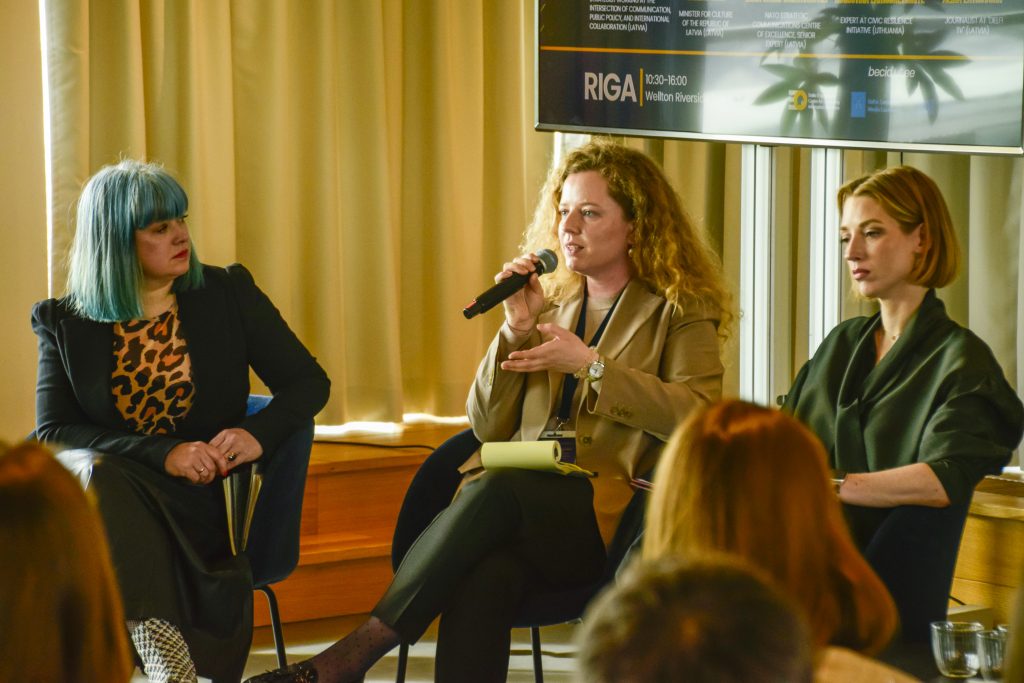
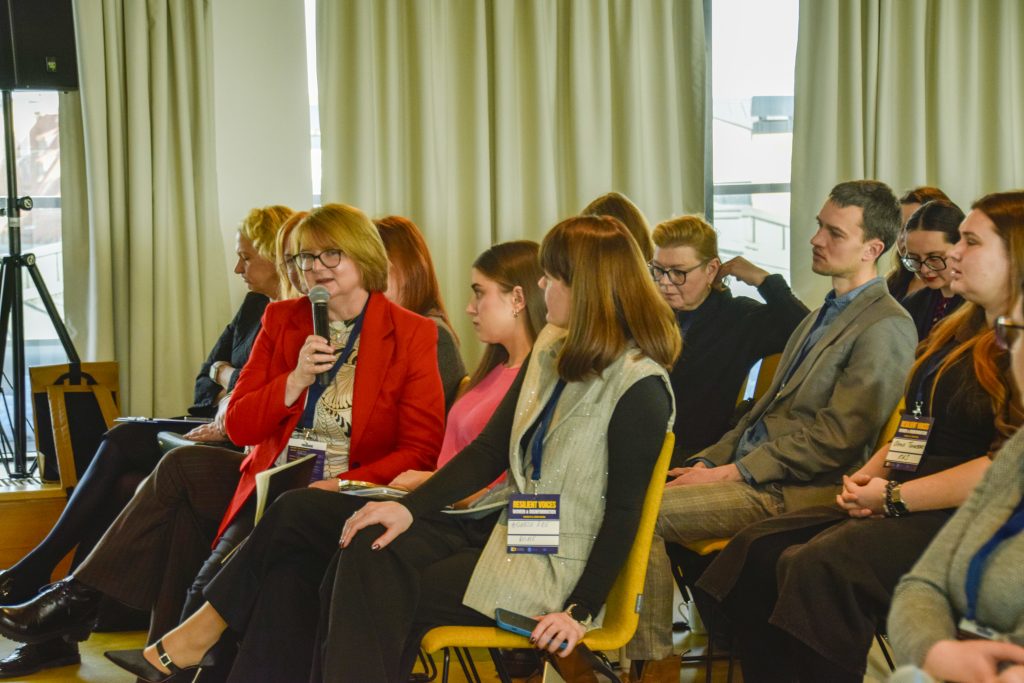
A panel discussion moderated by Linda Curika examined how gender- and identity-based narratives are increasingly used to polarize societies in the Baltic region. Speakers discussed how online harassment, hostile narratives, and social media dynamics shape the information environment.
Participants noted that gender has become a significant battleground in contemporary information warfare. Disinformation campaigns often exploit debates about “traditional values,” minority rights, and gender equality in order to deepen social divisions and undermine trust in democratic institutions.
Speakers also shared personal experiences illustrating these dynamics. Latvia’s Minister of Culture Agnese Lāce described how public criticism following a media appearance with her child focused on motherhood and personal credibility rather than policy issues. Alina Lastovska, journalist at Delfi, described similar experiences, noting that attacks against women often target appearance, family life, or personal characteristics rather than professional work.
Experts also emphasized that online hostility is not driven only by foreign actors or automated bot networks. According to Elīna Lange-Ionatamišvili from the NATO Strategic Communications Centre of Excellence, a significant share of hostile content originates from authentic users, reflecting broader social norms and the normalization of aggressive communication online.
At the same time, social media platforms can amplify these dynamics by enabling rapid dissemination of hostile commentary and allowing vocal minorities to dominate public discussions.



Strengthening Resilience: Policy, Media, and Education
Participants highlighted several strategies for strengthening resilience against disinformation.
Policy discussions emphasized the need to support independent journalism and analytical media, strengthen public broadcasting, and provide support for regional media outlets to counter local misinformation. Legal frameworks and cooperation with law enforcement were also discussed as ways to address threats against journalists and public figures.
Augustina Zamuškevičiūtė from the Civic Resilience Initiative highlighted initiatives aimed at strengthening media literacy and critical thinking among young people. She emphasized that media literacy should be integrated across educational subjects from an early age, helping students understand digital information environments and recognize manipulative messaging.
Civil Society Mobilization and the Istanbul Convention Debate
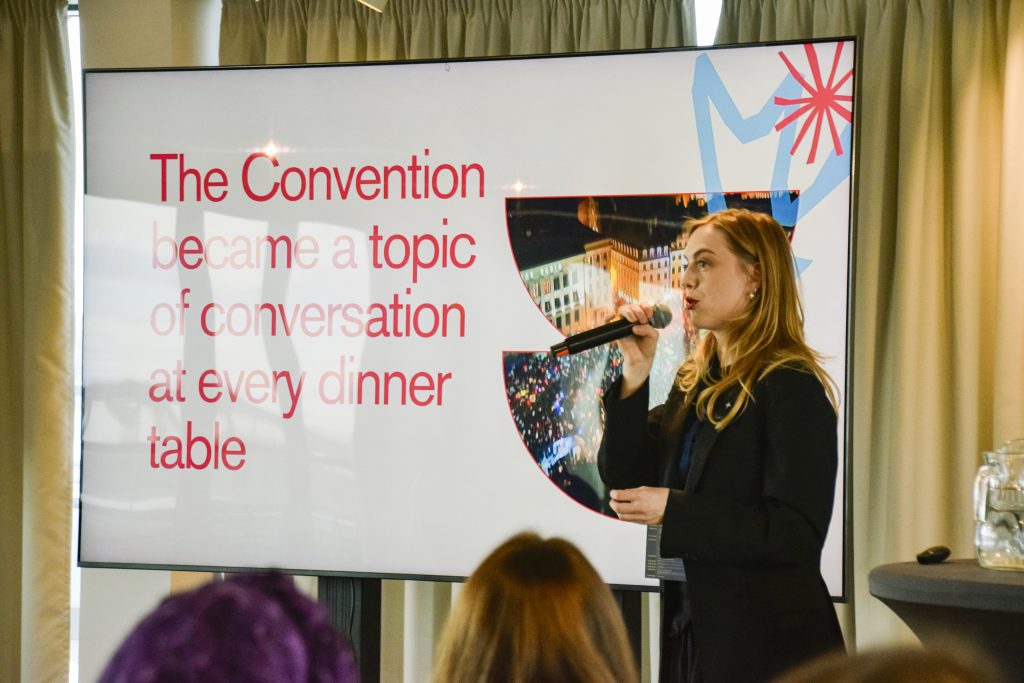
The role of civil society in defending democratic values was illustrated by Beata Jonite, Head of Advocacy at the Latvian NGO Centrs MARTA. She presented the organization’s work supporting victims of violence and advocating for stronger legal protections.
Jonite focused on the polarized public debate surrounding the Istanbul Convention in Latvia. Despite misinformation portraying the treaty as a threat to traditional values, civil society organizations mobilized large-scale public support to defend it.
In response to political efforts to withdraw from the convention, NGOs organized protests and public campaigns. Within days, more than 70,000 signatures were collected urging the President not to approve withdrawal. Ultimately, the President refused to sign the law, demonstrating the impact of civic mobilization in defending democratic principles.

Investigative Journalism and Hybrid Influence
The conference also highlighted the role of investigative journalism in exposing coordinated disinformation networks.
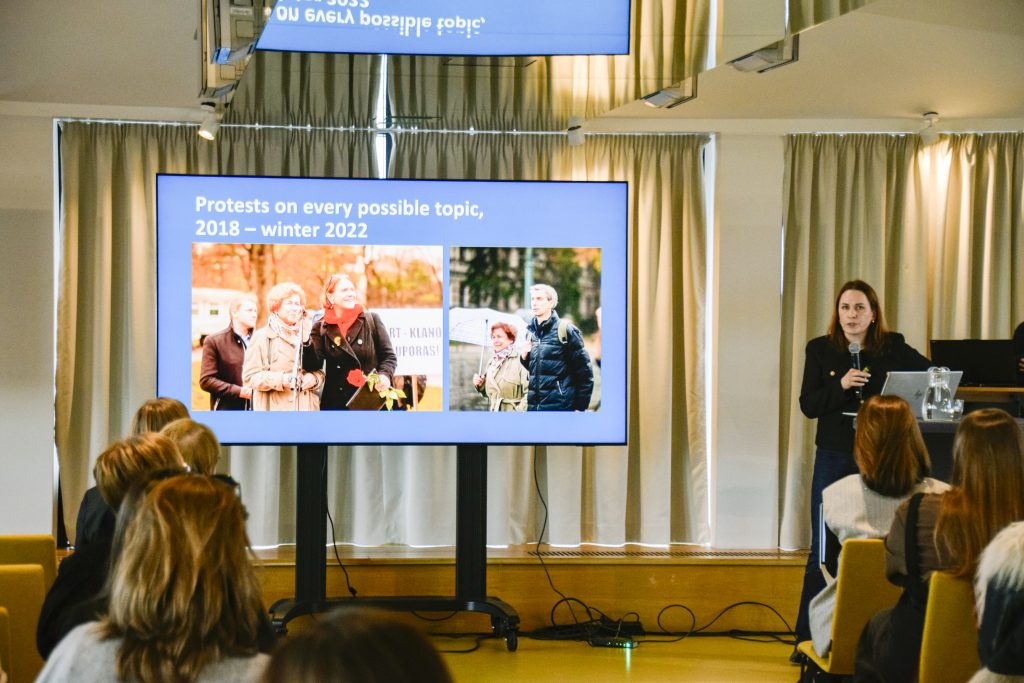
Indrė Makaraitytė, Head of the Research Department at Lithuanian public broadcaster LRT, presented investigative findings linking protest movements in Lithuania to pro-Kremlin influence networks. Journalists documented recurring organizers promoting narratives aligned with Russian propaganda, portraying governments as illegitimate and suggesting that citizens had been deprived of political power.
Similar narratives have appeared across several countries in the region, suggesting broader influence campaigns. Investigating these networks often exposes journalists to harassment and coordinated discrediting efforts, highlighting the need for stronger protection mechanisms and cooperation with law enforcement.

Understanding the Digital Dynamics of Gender Disinformation
Academic presentations further explored how digital environments shape gender narratives and enable disinformation.
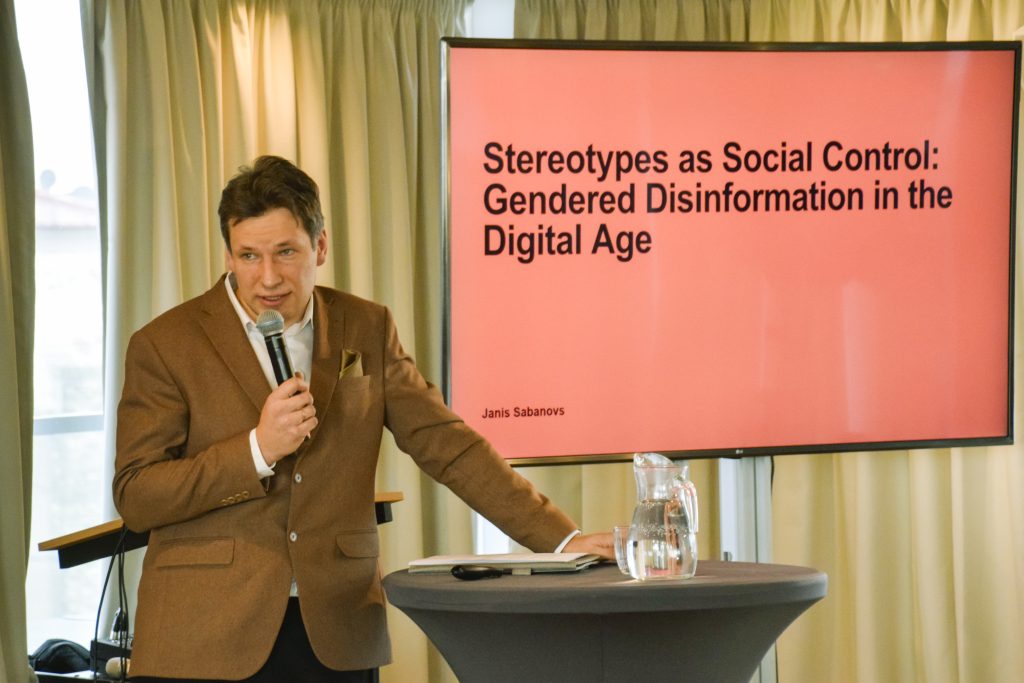
Researcher Jānis Šabanovs from Rīga Stradiņš University examined how digital platforms function as “gender technologies” that shape expectations and social norms. Repeated stereotypes can evolve into prescriptive norms that regulate behavior and reinforce social hierarchies, making them powerful tools in gendered disinformation campaigns.
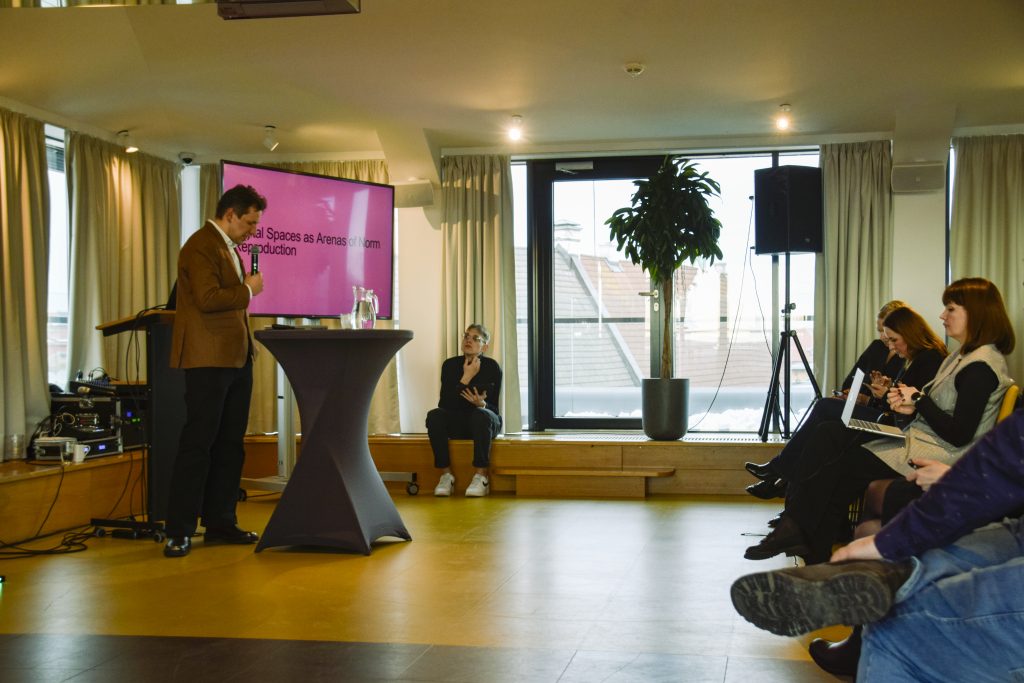
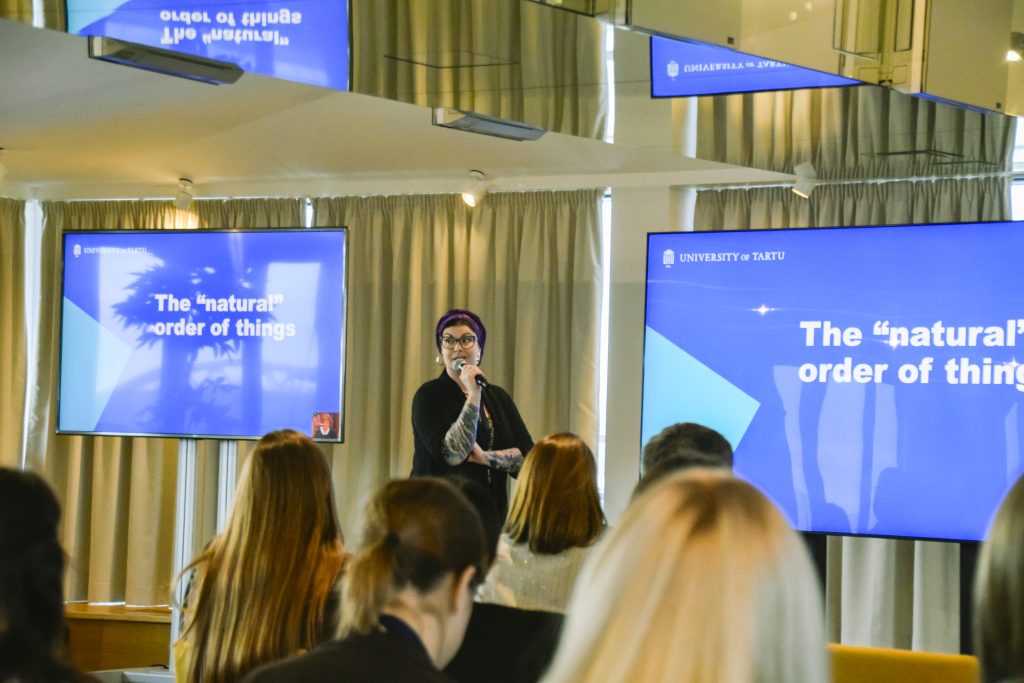
Similarly, Maria Murumaa-Mengel from the University of Tartu examined how stereotypes and emotionally charged communication are amplified online. She also highlighted the concept of social steganography – hidden messages embedded in memes, emojis, and coded language that convey discriminatory or extremist ideas to specific audiences.
Gender narratives are frequently used in geopolitical propaganda as well. Pro-Kremlin campaigns often promote narratives about “traditional values” while portraying Western societies as morally corrupt in order to provoke emotional reactions and deepen social divisions.


A Shared Challenge for Democratic Societies
A central conclusion of the conference was clear: gendered disinformation is not only a women’s issue but a systemic challenge to democratic governance.
By exploiting stereotypes, emotional narratives, and digital infrastructures, such campaigns aim to silence voices, weaken independent media, and undermine trust in democratic institutions.
Addressing this challenge requires coordinated action across multiple sectors. Strengthening independent journalism, improving legal protections, expanding media literacy, supporting civil society initiatives, and enhancing cooperation between governments, researchers, and technology platforms are all essential components of a resilient information environment.
Ultimately, protecting democratic participation requires ensuring that all voices – regardless of gender or identity – can engage safely and meaningfully in public debate.